
Article: NDIS SIL Changes 2026 | Get Audit-Ready with Our SIL Pack
NDIS SIL Changes 2026 | Get Audit-Ready with Our SIL Pack
NDIS SIL in 2026: What's Changed, What It Means, and Why You Need to Act Now
If you're a Supported Independent Living provider — or you've been thinking about becoming one — you've probably noticed that things have gotten a lot more serious in the last few months. And honestly? That's not an overstatement.
1 July 2026 brought with it some of the most significant changes the NDIS has seen in years, and if you haven't already started preparing, this is your wake-up call.
So What Actually Happened?
For a long time, SIL was one of the few areas of the NDIS where both registered and unregistered providers could operate side by side. That's no longer the case.
The push for change didn't come out of nowhere. The Disability Royal Commission, the NDIS Review and the Commission's own investigation into supported accommodation all pointed to the same uncomfortable truth — too many participants in SIL settings were experiencing serious safety incidents, and the existing system wasn't doing enough to prevent them. In fact, the Commission's Own Motion Inquiry found that an overwhelming majority of all reportable incidents across the NDIS were occurring in supported accommodation settings.
Something had to change. And it did.
Mandatory Registration Is Now a Reality
From 1 July 2026, if you deliver SIL supports, you must be registered. Full stop.
A brand new registration group — 0138 Assistance with Supported Independent Living — came into effect on that date, replacing the old group 0115 which now only applies to STA, MTA and ILO arrangements. SIL has its own dedicated category now, with its own Practice Standards and its own audit requirements.
If you were already delivering SIL before 1 July and haven't yet registered, you have until 1 October 2026 to submit your application or you will lose the ability to claim for your services entirely. Plan managers will be required to reject invoices from unregistered SIL providers from that date.
And here's the part that catches a lot of people off guard — certification audits typically take between 8 and 12 months to complete. So if you haven't started yet, the clock is ticking louder than you might think.
The New SIL Practice Standards — What Are Auditors Actually Looking For?
This is where it gets really important to understand what's changed. The new SIL Practice Standards aren't just about having a policy folder that ticks boxes. Auditors are looking for genuine, observable evidence that your practice actually reflects what your documentation says.
There are four new SIL modules every provider will be audited against:
Supported Decision-Making
This one is about so much more than just having a policy. Auditors want to see that participants in your SIL homes are genuinely driving decisions about their own lives — their routines, their relationships, who they live with. Not just on paper, but in the day-to-day reality of how your workers show up and support them.
Safeguarding
With the vast majority of NDIS reportable incidents occurring in supported accommodation, it's no surprise that safeguarding has become a major focus. Providers need to demonstrate concrete systems for identifying and responding to harm, trained workers who understand trauma-informed practice and de-escalation, and genuine participant involvement in their own safety planning.
Practice Governance
Think of this as the "does your workforce actually do what your policies say" module. Consistent support across shifts, evidence-based practice, proper training and supervision — auditors are going to want to see that the quality of support doesn't change depending on who's working that day.
Agreements about Tenancy, Housing and Support Arrangements
One of the most important protections introduced under the new standards is the clear separation between a participant's housing arrangement and their SIL support. Participants must feel secure in their home and must never feel that their housing is at risk because of anything related to their support. This module requires specific documentation to demonstrate that boundary is being maintained.
Your Documentation Needs to Reflect All of This
Here's the reality that a lot of providers are facing right now — their existing policy and procedure packs just aren't going to cut it for the new SIL audit. The new Quality Indicators are specific, the modules are brand new, and auditors are going to be looking for documentation that directly addresses each one.
Trying to adapt your existing Core Module documents to cover the SIL requirements is a bit like trying to fit a square peg into a round hole. It creates gaps, and gaps in your documentation at audit time are the last thing you want.
We Built Something to Fix Exactly That
When the new SIL Practice Standards were confirmed, we got to work. The result is the NDIS Supported Independent Living (SIL) Pack (2026) — a complete suite of policies, procedures and forms built from the ground up to align with the four new SIL modules and the Quality Indicators you'll be audited against.
The pack includes everything you need to submit a compliant and successful application:
- 4.12 Supported Decision-Making Policy and Procedure
- 4.13 Safeguarding Policy and Procedure
- 4.14 Practice Governance Policy and Procedure
- 4.15 Agreements about Tenancy, Housing and Support Arrangements Policy and Procedure
- 168 - Co-Tenant Compatibility Assessment
- 169 - Safeguarding Plan
- 170 - Supported Decision-Making Plan
- 171 - Tenancy and Service Agreement Distinction Checklist
Whether you're applying for registration for the first time or you're an existing provider updating your documentation ahead of your next audit, this pack is designed to remove the guesswork and give you the confidence that your documentation is audit-ready.
After purchase you'll receive an instant download link so you can start customising with your business details straight away.
The Bottom Line
The changes that came into effect on 1 July 2026 aren't going away, and the deadlines are real. If you're delivering SIL supports without registration, you have until 1 October 2026 to submit your application — after that, you won't be able to claim for your services.
Don't leave your documentation to the last minute. Get audit-ready now.
Read more
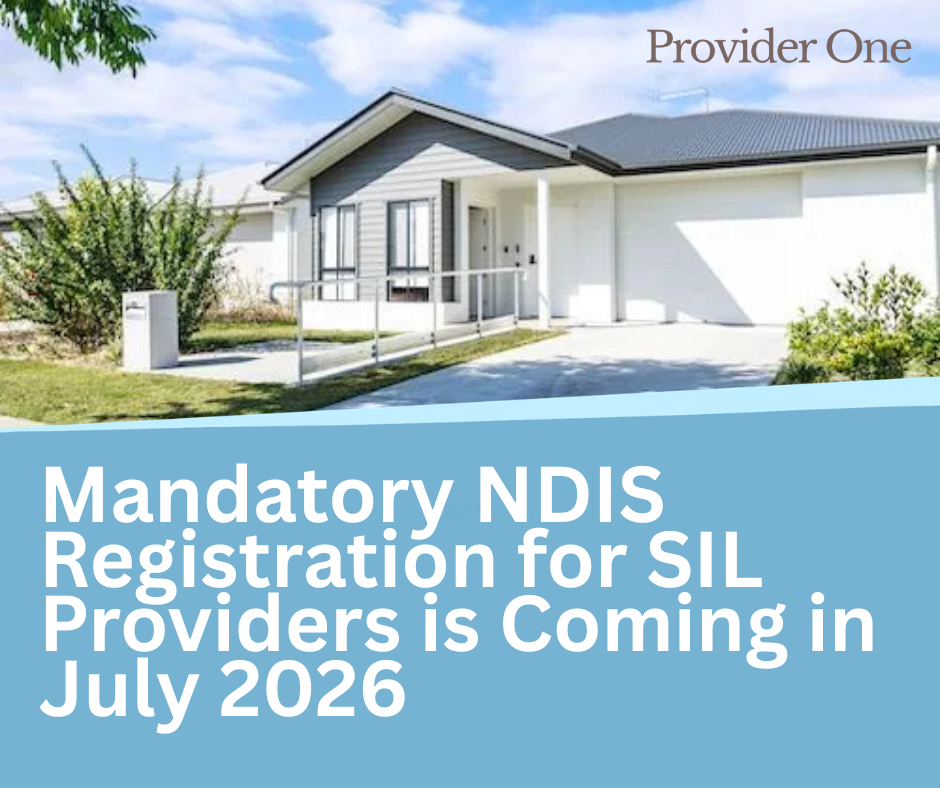
Mandatory NDIS registration for SIL providers starts 1 July 2026. Find out what it means for your business and how to get registered before the deadline.
Read more


Leave a comment
This site is protected by hCaptcha and the hCaptcha Privacy Policy and Terms of Service apply.